
Acoustic Treatments FAQ
What are acoustic treatments?
Acoustic treatments are materials designed to control how sound behaves inside a room. They can absorb, diffuse, or reflect sound to reduce unwanted echo andreverberation, improve speech clarity, and create a more comfortable listening environment.
What is the difference between acoustic treatment and soundproofing?
Acoustic treatment improves how sound behaves inside a room. Soundproofing focuses on reducing sound transmission between spaces. If your problem is echo, excessive reverberation, poor speech clarity, or an overly loud-feeling room, acoustic treatment may be the appropriate solution.
How do I know if my room needs acoustic treatment?
If conversations are difficult to understand, the room sounds echoey, music lacks clarity, or noise becomes overwhelming when several people are talking, room acoustics may be contributing to the problem. Hard, reflective surfaces can make these issues more noticeable.
What causes echo and excessive noise in a room?
Large areas of glass, concrete, drywall, wood, tile, high ceilings, and other hard surfaces can reflect sound rather than absorb it. When those reflections continue around a room, speech and music can become less clear and the space can feel excessively loud.
How do acoustic panels work?
Acoustic panels help control sound reflections by absorbing selected sound energy rather than allowing it to continue bouncing around the room. Different materials, panel thicknesses, placements, and treatment strategies can be used depending on the acoustic problem.
Where should acoustic panels be placed?
Placement depends on the room, acoustic problem, listening areas, reflective surfaces, and treatment goals. Rather than covering walls randomly, acoustic treatments should be positioned where they can effectively address the room's specific sound issues.
How many acoustic panels does my room need?
There is no universal number. Room size, ceiling height, construction materials, furnishings, intended use, and the severity of the acoustic problem all affect the amount of treatment needed. An acoustic evaluation helps determine an appropriate solution.
Do acoustic panels reduce noise in restaurants and bars?
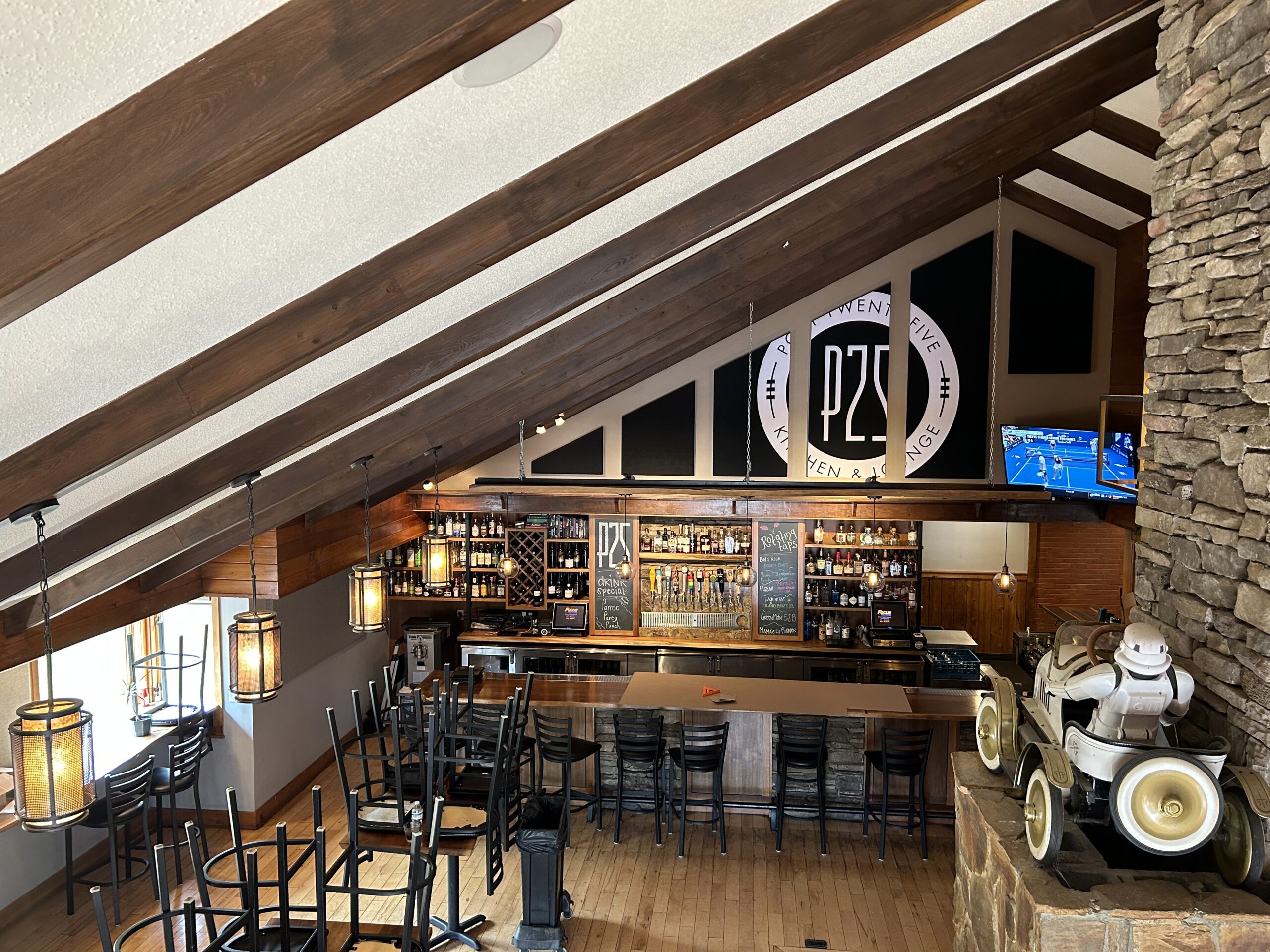
Yes. Acoustic treatments can reduce reverberation and reflected sound, helping restaurants, bars, breweries, and other busy hospitality spaces feel more comfortable and making conversation easier to understand.Harmony has completed acoustic projects for Asheville-area businesses including Curate, Asheville Proper, and Post 25 Kitchen and Lounge.
Can acoustic treatment make conversation easier to understand?
Yes. Reducing excessive reverberation helps prevent speech from overlapping with lingering sound reflections. That can improve speech intelligibility and make conversations more comfortable in restaurants, offices, meeting rooms, and other shared spaces.
Are acoustic treatments useful in home theaters?
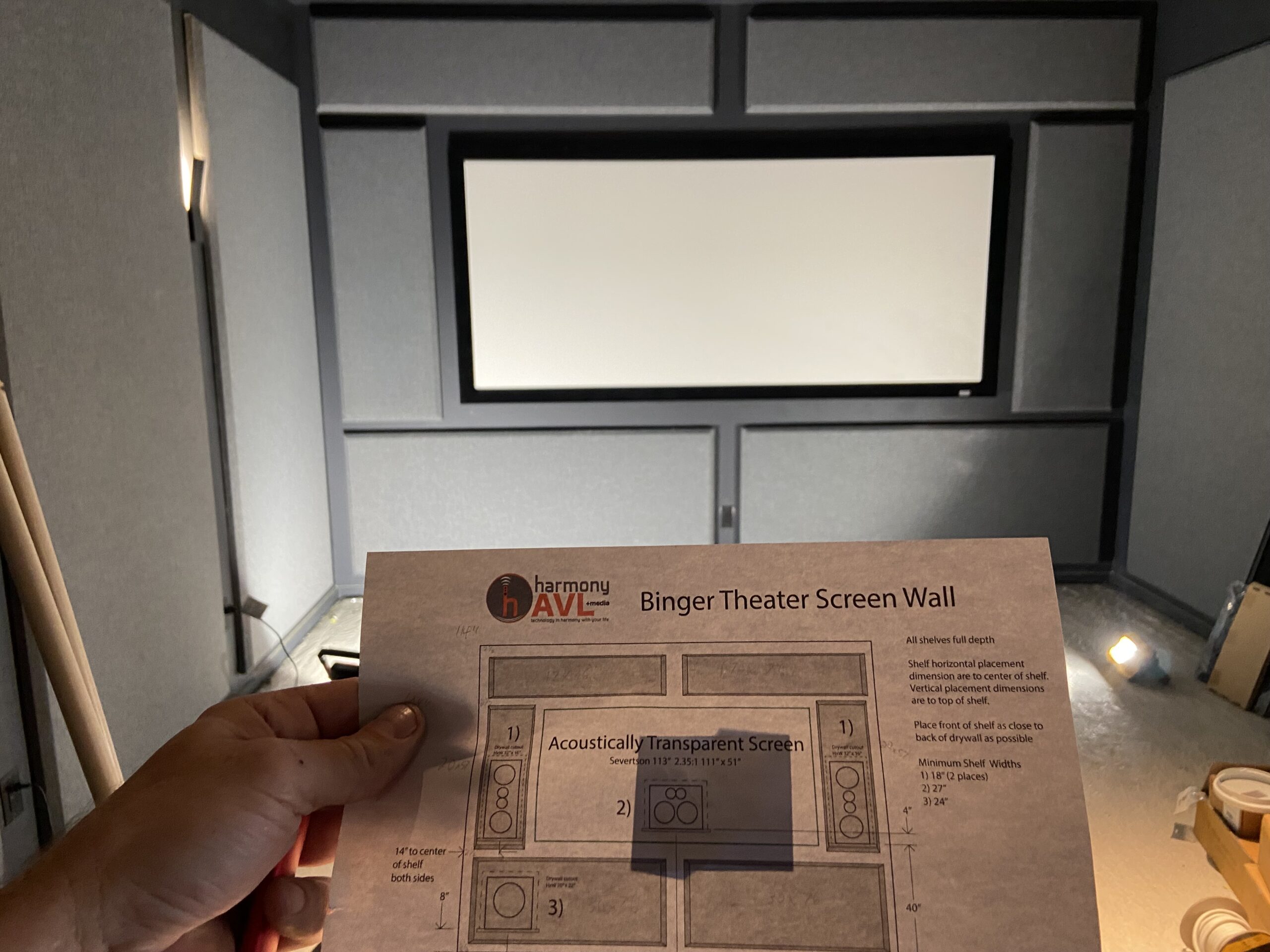
Yes. Acoustic treatment can improve dialogue clarity, reduce unwanted reflections, and help a home theater’s speakers and subwoofers perform more effectively within the room. Harmony already identifies acoustic treatments as an important consideration for media- room performance.
Can acoustic treatments improve a two-channel listening room?
Yes. Room acoustics play a major role in what you hear from a high-performance stereo system. Proper treatment can manage reflections and reverberation so the characteristics of the room interfere less with the listening experience.
Are acoustic panels only for music and theater rooms?
No. Acoustic treatments can benefit restaurants, bars, offices, meeting spaces, clubhouses, studios, hospitality environments, and other spaces where excessive reflected sound interferes with conversation, comfort, or listening.
Will acoustic panels make my room look like a recording studio?
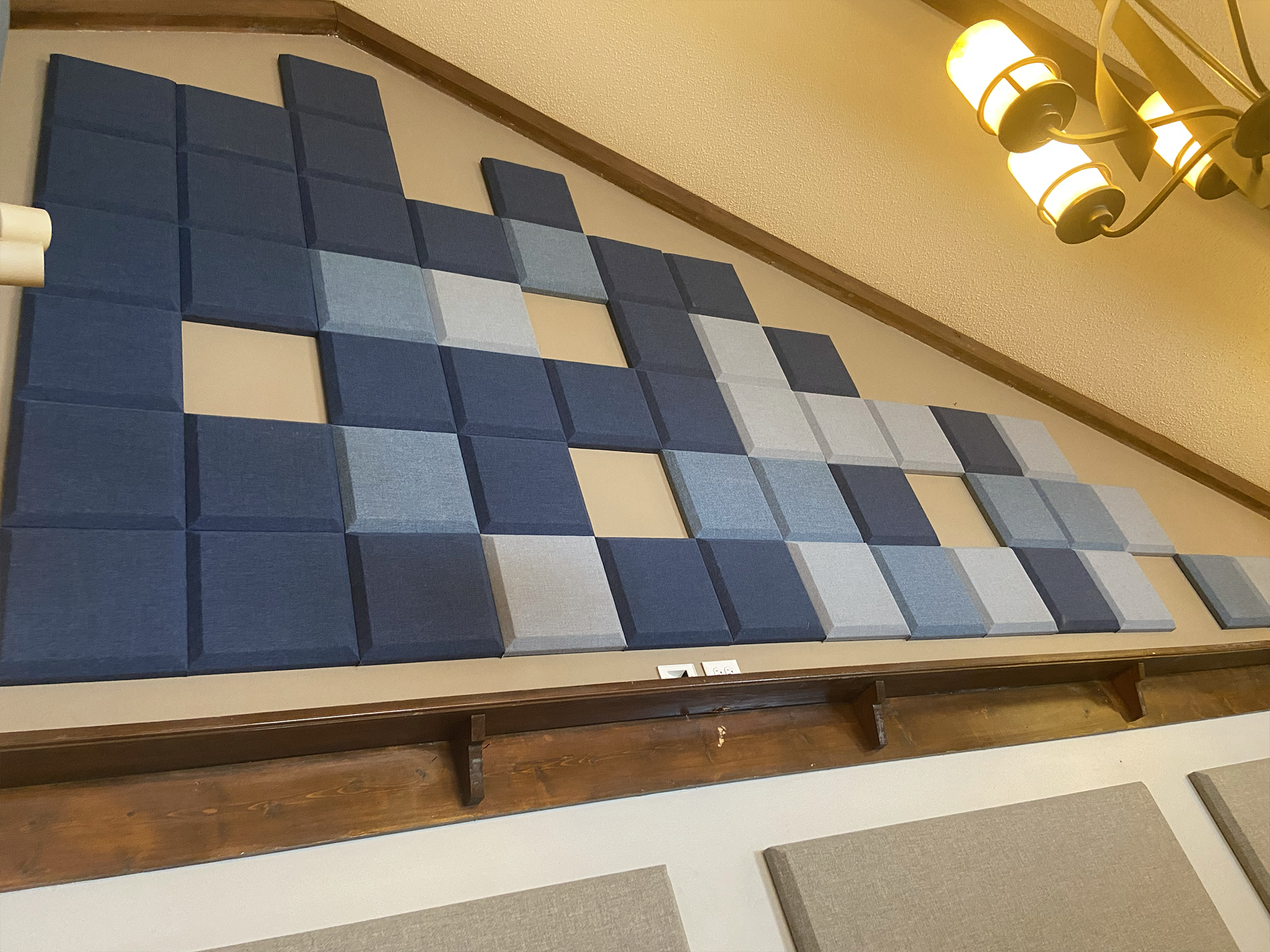
Not necessarily. Modern acoustic treatments are available in a wide range of colors, fabrics, shapes, sizes, and designs. Treatments can be designed to complement the room rather than making it look overly technical. This is a major differentiator for Harmony. Their existing acoustic work deliberately combines sound control with visual design.
Can acoustic panels be customized to match my interior design?
Yes. Acoustic panels can incorporate different fabrics, colors, shapes, and configurations to coordinate with the design of the space. Treatments can be subtle and blend into the room or become an intentional visual feature.
Can you print artwork, photography, or a logo on acoustic panels?
Yes. Custom-printed acoustic panels can incorporate photography, artwork, graphics, or branding while still functioning as acoustic treatment. This can be particularly effective when acoustic performance needs to complement a specific interior design or commercial brand.
Can acoustic treatments be installed on ceilings?
Yes. Depending on the space and acoustic problem, treatments can be incorporated on walls, ceilings, or both. Ceiling-mounted solutions can be especially useful in spaces where wall area is limited or where tall ceilings and hard surfaces contribute to excessive reverberation.
Can acoustic treatments help in rooms with large windows and hard surfaces?
Yes. Rooms with extensive glass and other reflective materials often experience significant sound reflections. Properly designed acoustic treatments can introduce absorption elsewhere in the room without requiring major changes to the architecture.
Will acoustic treatment make a restaurant or room too quiet?
It shouldn’t. The goal is usually control, not silence. Good acoustic treatment reduces excessive reverberation while preserving the energy and character appropriate for the space.
Can acoustic treatments be added to an existing space?
Yes. Acoustic treatments can often be added without a major renovation. Existing homes, restaurants, offices, and commercial spaces can be evaluated to determine where treatments can have the greatest impact while working with the existing décor.
Should acoustic treatments be planned during new construction?
Ideally, yes. Early planning allows acoustics to be considered alongside architecture, interior finishes, speaker placement, lighting, and other systems. However, acoustic problems can also be addressed after a space has been completed.
How much do acoustic treatments cost?
Cost depends on the size of the space, acoustic issues being addressed, amount and type of treatment, custom design requirements, materials, mounting locations, and installation. The appropriate solution should be based on the room rather than a predetermined number of panels.
Who installs acoustic treatments in Asheville, NC?
Harmony AVL+media designs and installs acoustic treatments for homes and businesses in Asheville and Western North Carolina. Solutions can address echo and reverberation while incorporating custom fabrics, colors, shapes, artwork, photography, and branding.

ADDRESS
Harmony AVL+media
936 Tunnel Rd
Asheville, NC 28805
CALL US
Sales: 828.250.9800 x-4
Support: 828.250.9800 x-2
8:30-5:30PM EST Monday-Friday
Sales: sales@harmonyinteriors.com
Support: support@harmonyinteriors.com
Demos and Meetings By Appointment